Are these dots purple or blue?
Here you can see the “9 Purple Dots” and the “Color Changing Dots” illusion, wherein purple structures are perceived as purple exclusively at the point of fixation, while the surrounding dots transition towards a blue hue. As the viewing distance increases, a greater number of dots revert to a purple appearance, culminating in the pattern being perceived as uniformly purple.
Details about this work were recently published in Perception


This effect is best visible on a cellphone display. It will be less obviously when the color temperature of the display has changed (NightMode, Dark mode etc.)
9 GRAY DOTS
Purple dots on a bluish or gray background resulting in a visible hue shift and darkening of the fixated spot. When gray dots are presented on a purple background, they might be perceived lighter with a slight shift to a green hue.
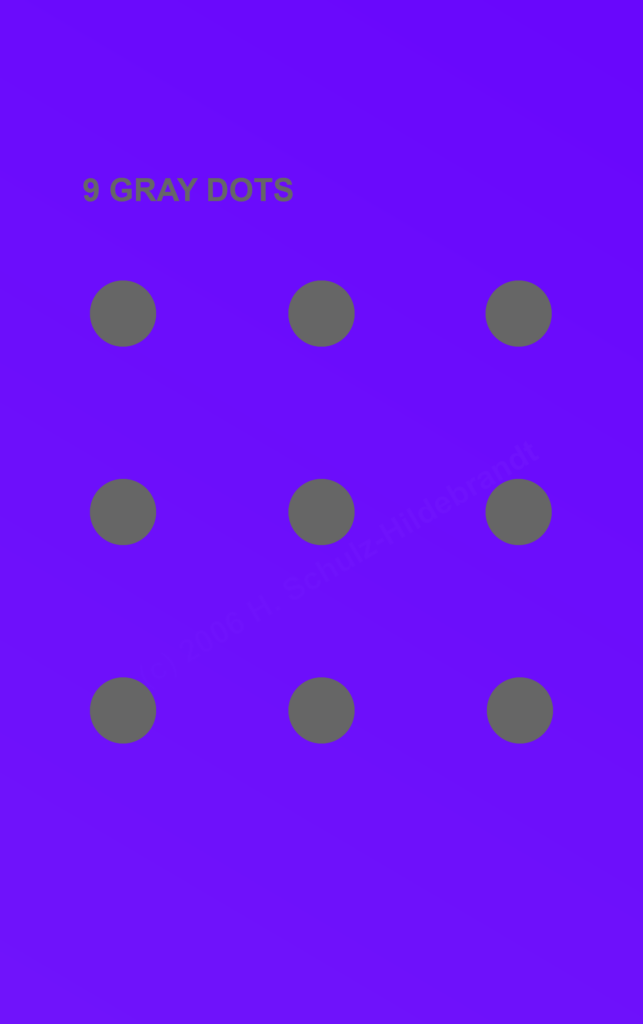
Does this only works on a blue background?
While the visibility of this effect works well on a blueish background, it also can be observed on other colors of gray backgrounds.
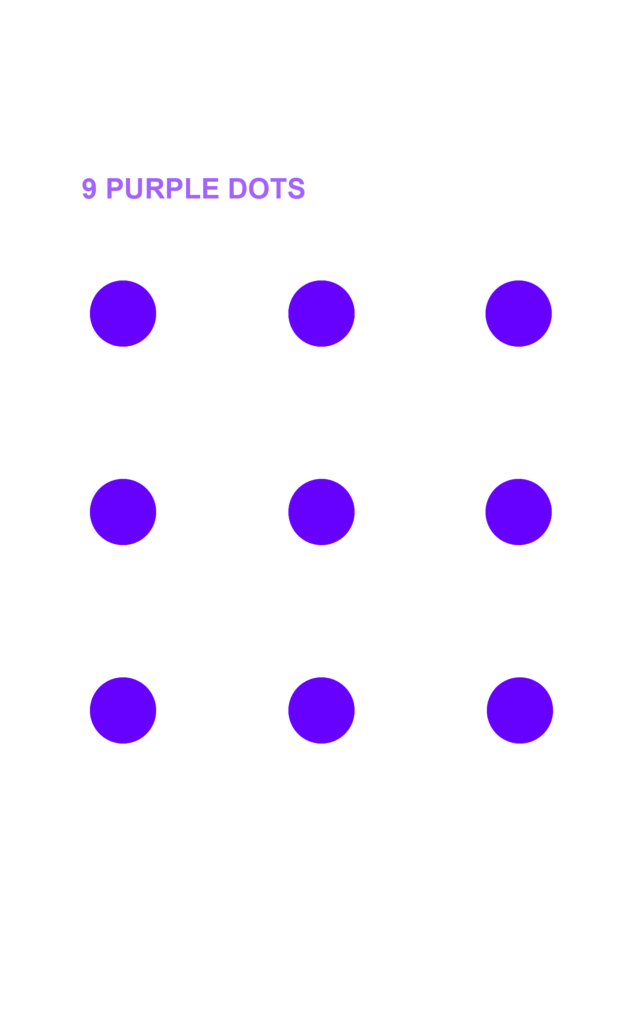
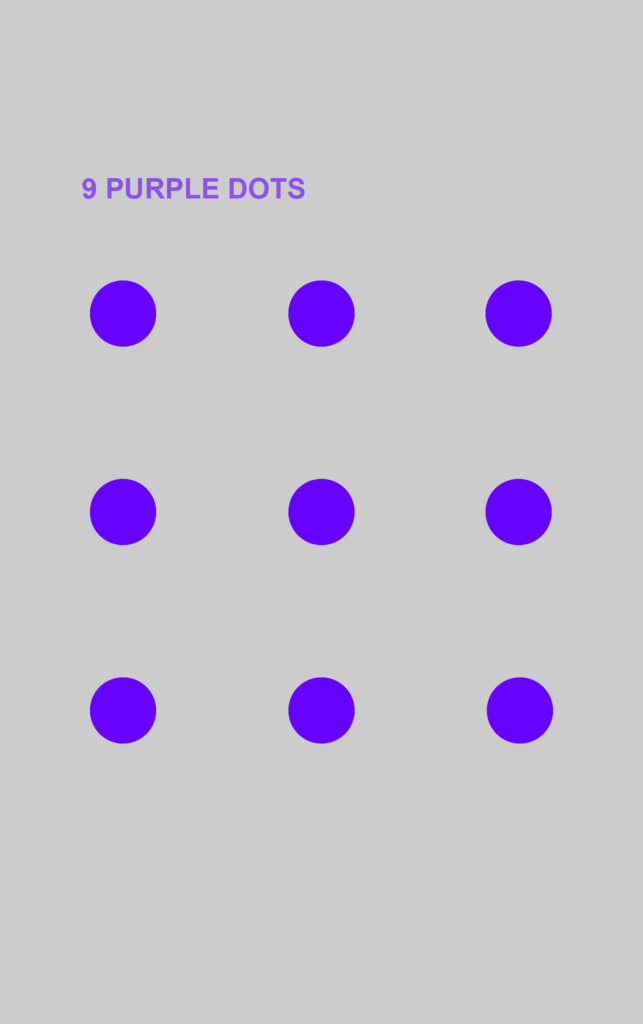
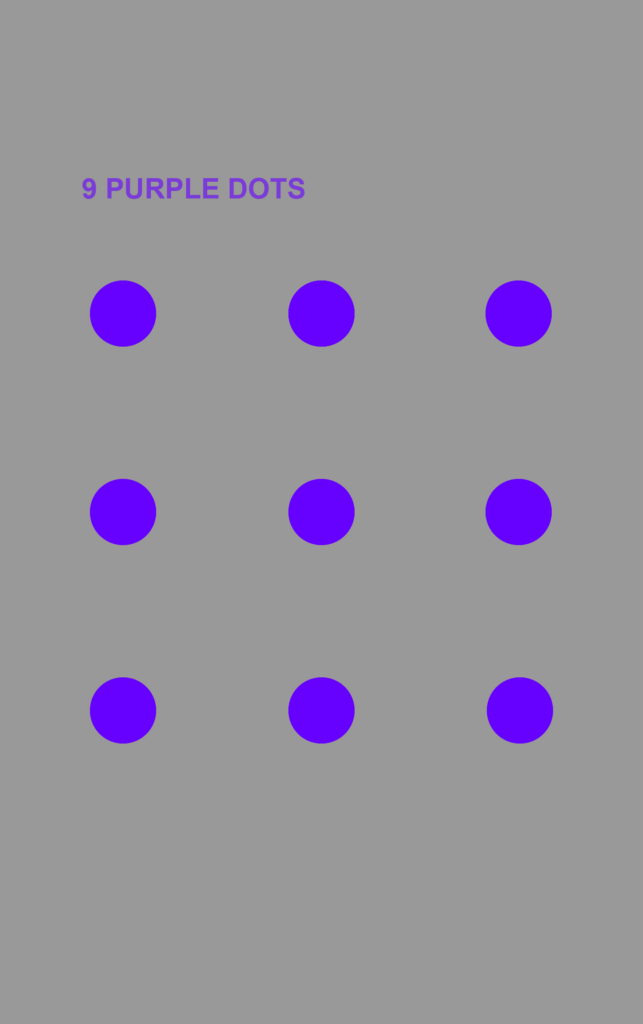
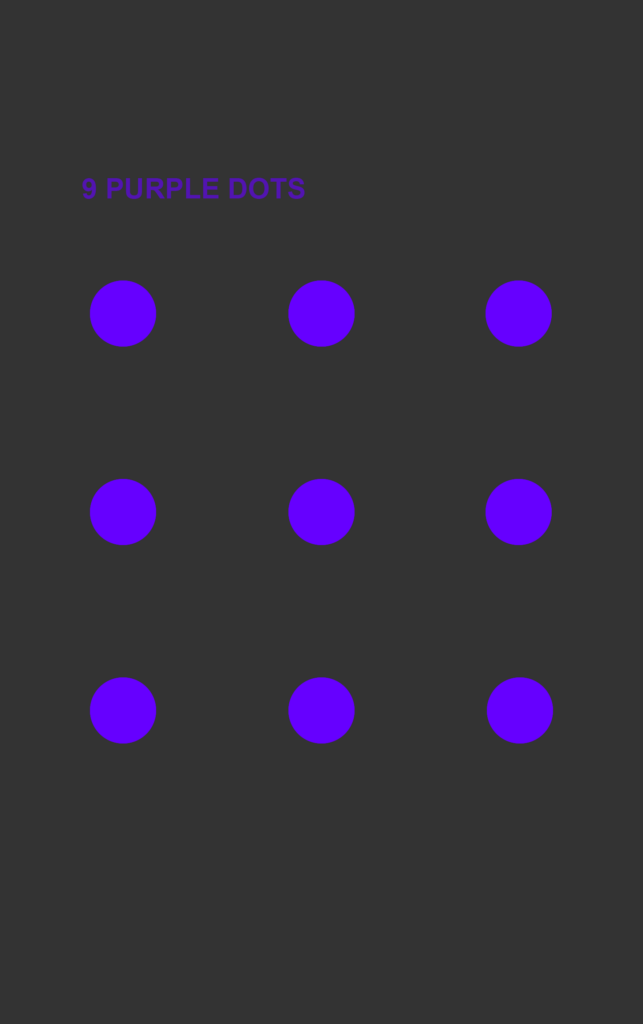
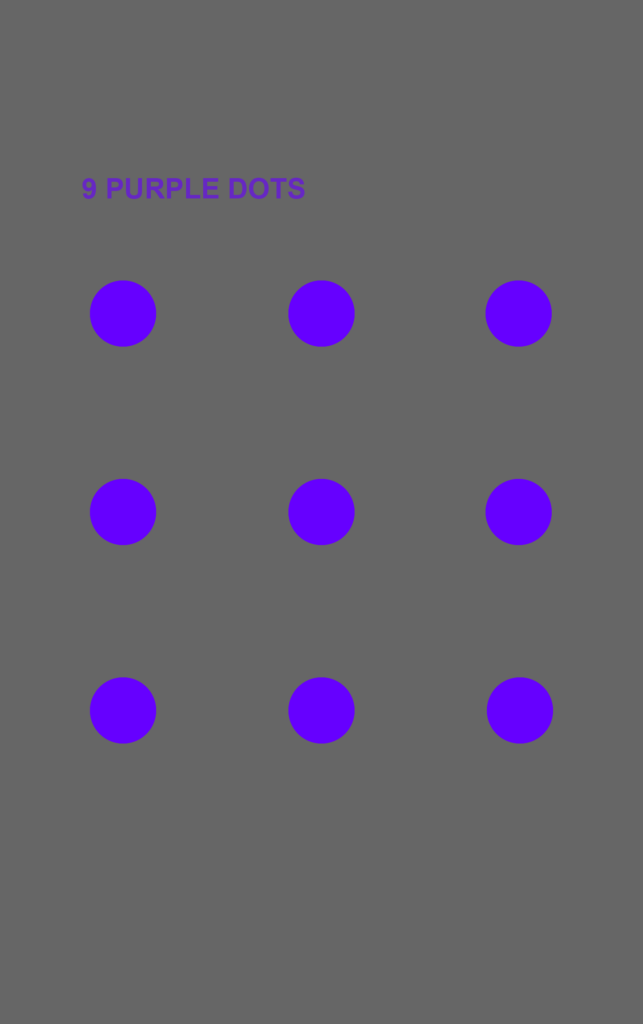
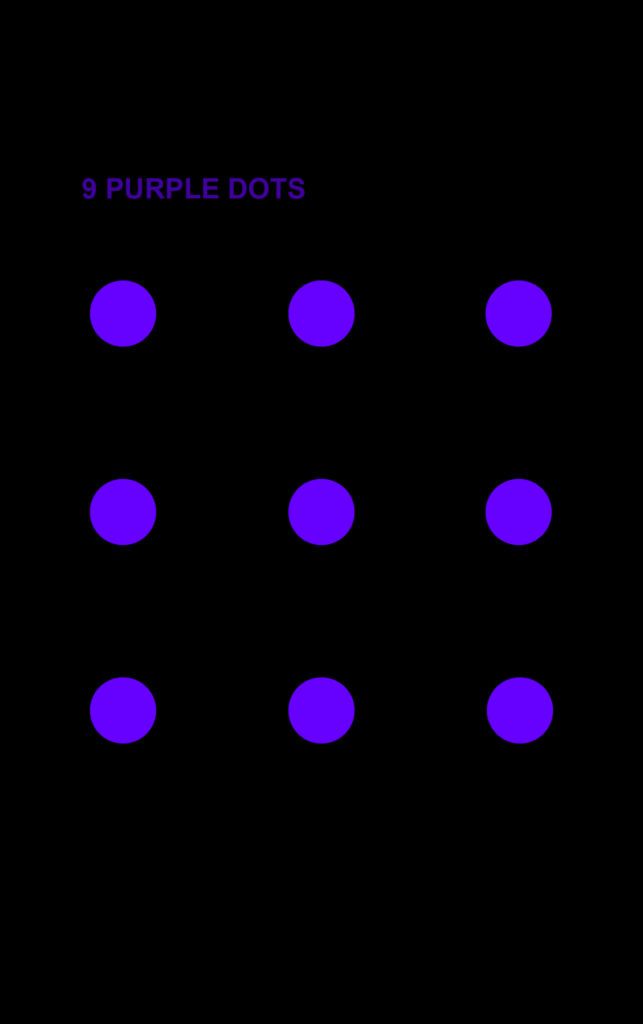
Ho does this (likely) works?
First, a classic color contrast effect, which would explain why the periphery structures show up in blueish, second, the reception of purple as a non-spectral color that is created exclusively through the combinet stimulation of red and blue receptors, and third, the center of our vision is less sensitive to blue light. The combination of these three effects aligns with the perception of the optical illusion which only occurs reliably in a narrowly limited color space and is clearly dependent on the viewing distance.
Try it yourself
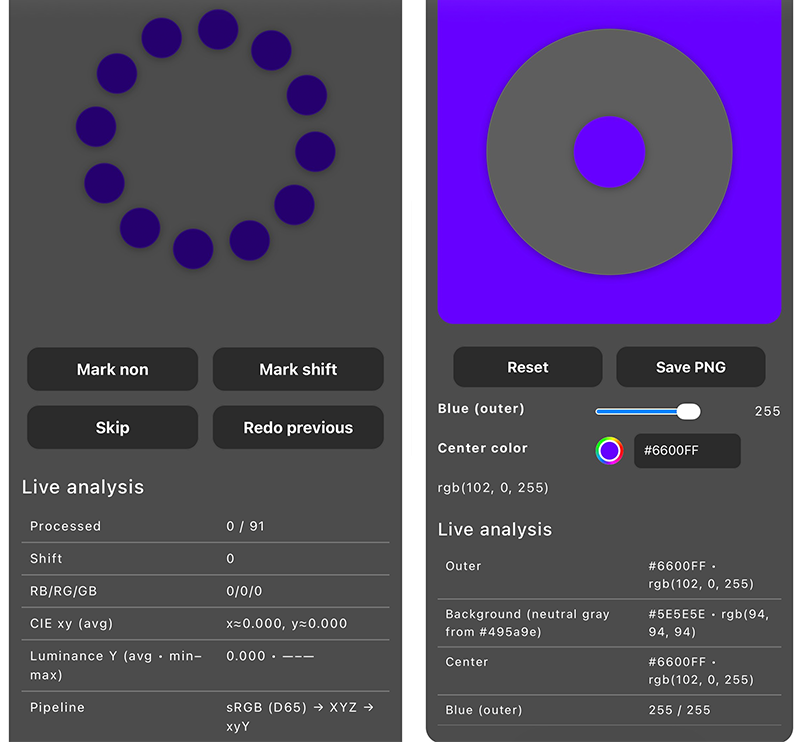
- Perceptual Color Test: Decide whether each color set shows a visible shift or not. (Link)
- Color-Matching Task: Adjust the blue component to find when center and outer colors appear identical. (Link)
Both links let you explore how your own color perception varies.
Further reading:
For details about the reduced blue sensitivity of the macula and how it relates to the Maxwell Spot Illusion, first shown by Prof. Kitaoka’s, please visit his homepage. (Link)
Leave a Reply